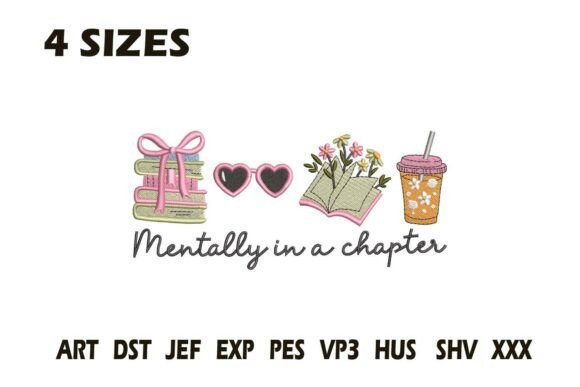
Mentally in a Chapter Embroidery Design
First Impression: Whimsical, Relatable, and Instantly Shareable
As an embroidery designer who’s prepped over 200 craft fair booths—and watched which designs stop shoppers mid-aisle—I immediately felt the quiet magnetism of Mentally in a Chapter Embroidery Design. It’s not loud or flashy, but it’s deeply human: playful yet thoughtful, lighthearted but layered. The title alone invites a smile and a pause—exactly what you want when someone’s scanning your booth for that “I need this” moment. It lands squarely in the Inspirational category, but with warmth—not preachy quotes or rigid affirmations, just gentle wit wrapped in handmade charm.
Where It Shines: Craft Fair Products That Sell
This machine embroidery design thrives where personality meets practicality. On a natural canvas tote bag? Perfect—it reads clearly from three feet away, especially with clean thread colors against unbleached cotton. As apron embroidery, it adds character without overwhelming the functional shape. For tea towel embroidery, it’s ideal: centered on the lower corner or tucked near the hanging loop, it feels intentional, not cluttered.
It also works beautifully as an embroidered patch—small enough to stitch cleanly on denim jackets or market bags, large enough to hold detail. On pillow covers and fabric pouches, Mentally in a Chapter Embroidery Design elevates the item from “cute” to “curated.” And for handmade product gifting—think small linen pouches tied with twine or mini tea towels folded in kraft boxes—it adds emotional resonance that buyers remember (and tag on Instagram).
What Buyers Notice First—And Why It Converts
Craft fair shoppers don’t read fine print—they absorb mood, clarity, and authenticity in under two seconds. Mentally in a Chapter Embroidery Design delivers all three: the phrasing is conversational, the implied illustration (even without seeing the artwork) suggests soft curves and friendly lettering, and the whole concept feels hand-chosen—not algorithm-generated. That builds trust fast. I’ve seen customers pick up a plain tea towel, glance at this design, and say, “That’s me right now.” That’s engagement you can’t fake.
For Etsy sellers and boutique makers, this translates directly to better click-throughs on listings. Paired with a strong printable mockup, it photographs exceptionally well—soft shadows, balanced negative space, and text legible even in thumbnail size. It doesn’t require heavy editing or stylized backdrops to feel premium.
Production Reality Check: What Works—and What Needs Care
This isn’t a one-size-fits-all digital embroidery file. Its strength lies in readability—but that depends on execution. Here’s what I test before adding it to my craft fair lineup:
- Stitch density: If the design includes dense fill areas or tight loops around letters, it may pucker on textured towels or thick canvas. Always run a test on scrap fabric matching your final product.
- Small lettering: “Mentally in a Chapter” implies readable typography—even at 3–4 inches wide. Avoid shrinking it below 2.5 inches; details blur, especially on dark fabric or uneven surfaces like curved cap fronts.
- Fabric texture matters: On terry cloth towels, use medium-weight cutaway stabilizer. On lightweight linen pouches, switch to tear-away + light spray adhesive. Skip the stabilizer? You’ll get shadowing and thread breaks.
- Hoop size & spacing: Confirm the file fits comfortably within your standard hoop (e.g., 4x4 or 5x7). Tight spacing between words or elements increases risk of misalignment during rehooping—critical when batch-producing 30+ items.
Booth Strategy: How This Design Strengthens Your Display
A strong craft fair product doesn’t just sit—it starts conversations. I always display Mentally in a Chapter Embroidery Design across at least three categories: a folded tea towel on a rustic shelf, a mini pouch pinned to a corkboard, and a simple white apron draped over a stool. That repetition builds recognition without redundancy. It also supports brand consistency—if your shop leans into cozy, mindful, or literary themes, this design becomes a quiet anchor across your line.
Visually, it balances busier patterns and solid-color items. Next to floral embroidery or geometric prints, it stands out for its narrative simplicity. And because it’s inherently giftable, it pairs well with add-on bundles (“Tea Towel + Mini Pouch Set”)—boosting average order value without extra marketing lift.
Designer Notes You Can’t Skip
Before stitching your first batch, do these six things:
- Test the embroidery file on scrap fabric matching your final product—same weight, weave, and dye lot.
- Check thread contrast: light gray on oatmeal linen reads differently than navy on black cotton. Swatch at least two combos.
- Review spacing between words and any decorative elements—tight kerning looks charming on screen but may vanish under thread.
- Confirm hoop size compatibility and whether repositioning is needed for multi-hooping (e.g., on large tote bags).
- Inspect stitch density—especially in curved letters or interior fills—to avoid stiffness or fabric distortion.
- Verify commercial licensing status. Even if labeled for personal use, selling finished products requires explicit permission for commercial embroidery.
Final Thought: A Design That Sells Because It Speaks
Mentally in a Chapter Embroidery Design succeeds not because it’s technically complex, but because it’s emotionally precise. It fits seamlessly into the small shop product ecosystem—scalable for Etsy, tactile for craft fairs, versatile for home studios. It doesn’t shout; it leans in. And in a world saturated with generic quotes and overdesigned motifs, that quiet confidence is exactly what makes customers reach out, smile, and say, “Yes—that’s mine.”
Whether you’re building a cohesive handmade product line or refreshing your digital embroidery file library, treat this design as both asset and ambassador: understated, memorable, and made to be shared—not just stitched.