Abstract Mountain River Embroidery
A Designer’s First Look: Clean, Calm, and Quietly Confident
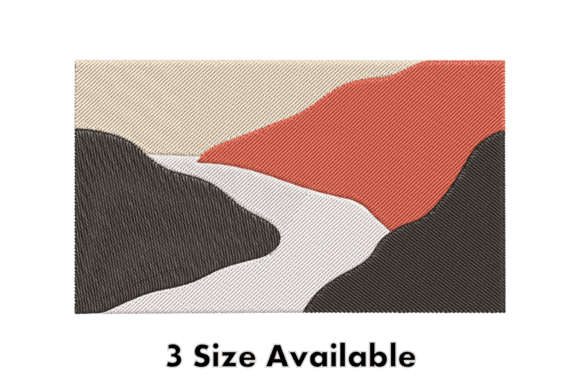
When I opened the Abstract Mountain River Embroidery file for the first time, what struck me wasn’t complexity—it was intention. This isn’t a literal landscape stitched in hyper-detail. It’s a distilled moment: peaks implied with gentle curves, a river suggested by a single fluid line, negative space doing as much work as thread. As a designer who’s stitched hundreds of nature-themed pieces—from forest motifs for baby onesies to alpine scenes on boutique aprons—I appreciate how this design trusts the viewer’s imagination. It feels modern without being cold, organic without being fussy. That balance makes it unusually versatile across Shapes and Embroidery applications.
Real-World Test: A Linen Tote Bag for a Local Bookstore Pop-Up
Last week, I used the medium-size Abstract Mountain River Embroidery on a natural linen tote bag—part of a small batch for a neighborhood indie bookstore’s summer launch. The goal? A subtle, elevated logo alternative that whispered “quiet adventure” rather than shouted “outdoorsy.” On the slightly nubby, low-stretch fabric, the design held its shape beautifully. The satin stitch along the river’s edge stayed crisp; the fill stitch in the mountain forms had just enough texture to read clearly without overwhelming the weave. Customers didn’t stop to ask *what* it was—they paused, tilted their heads, smiled, and said things like, “That feels like my favorite hiking trail, but softer.” That’s the power of abstraction done right: it invites personal connection, not just recognition.
Where It Shines—and Where to Pause
The Abstract Mountain River Embroidery excels on stable, medium-weight fabrics: cotton twill for aprons, French terry for sweatshirts, midweight canvas for patches or pillow covers. Its clean lines translate well to custom apparel for men, women, and kids—especially when you want cohesion across a family set (think matching camp-themed tees). It also works thoughtfully on kitchen towels and tea towels, where minimalism reads as intentional, not sparse.
But here’s where experience kicks in: avoid it on highly textured surfaces like bouclé or thick fleece unless you’re willing to add extra stabilizer and test stitch density. On stretchy knits—like lightweight t-shirts—use a light cutaway stabilizer and consider reducing the design size slightly to prevent distortion. And while it reads well on dark fabric, test your thread colors carefully: a pale sage or slate blue will lift the mood differently than charcoal gray or cream. For curved surfaces like caps, stick to the smallest size and confirm hoop clearance—the flowing river line can pull awkwardly if forced onto a tight radius.
Design Integrity in Finished Products
What elevates this beyond a decorative motif is how it supports perceived value. When stitched cleanly, the Abstract Mountain River Embroidery reads as intentional design—not clipart. That matters for Etsy sellers pricing handmade products, craft fair vendors building trust, or small shop owners curating boutique branding. Customers notice the difference between a rushed fill stitch and one that breathes with the fabric. It also photographs exceptionally well in printable mockups: no busy background needed, no over-editing required. In fact, I’ve used it in black-and-white mockups for client presentations—and every time, it communicated calm sophistication faster than any description could.
Practical Notes Every Embroidery Designer Should Check
- Test first—always run the Abstract Mountain River Embroidery on scrap fabric matching your final project’s weight and stretch.
- Review stitch density before stitching on delicate items like baby embroidery or holiday embroidery for heirloom keepsakes.
- Confirm hoop size—the three available sizes likely correspond to common hoops, but verify before hooping a full garment panel.
- Inspect corners and transitions—abstract shapes rely on smooth vector flow; check that curves don’t digitize into stair-stepped edges.
- Compare light/dark backgrounds using simple digital mockups—some abstract forms lose definition without contrast.
- Use proper stabilizer—especially for commercial embroidery runs where consistency matters across dozens of tote bags or sweatshirts.
- Check licensing before selling finished products or listing the Abstract Mountain River Embroidery as part of a digital embroidery file bundle.
More Than a Shape—It’s a Story Anchor
In my work with creative entrepreneurs, I’ve watched how one strong, thoughtful design can become the quiet heartbeat of a brand. The Abstract Mountain River Embroidery doesn’t try to tell the whole story—it gives people space to finish it. That makes it ideal for personalized gifts (a monogrammed pillow cover with this motif beside a name), wedding gifts (stitched on linen napkins for a mountain elopement), or even nursery decor where subtlety supports serenity over stimulation. It’s not flashy—but it’s memorable. Not loud—but it holds attention. That’s rare in machine embroidery design, especially in the Shapes category, where simplicity often tips into sterility.
Final Thought: A Design That Grows With You
Whether you’re an Etsy seller building a cohesive collection, a craft business owner refreshing seasonal merchandise, or a hobbyist stitching meaningful gifts, the Abstract Mountain River Embroidery earns its place in your library because it adapts. It looks equally at home on a rugged embroidered patch for a hiking club and a refined tea towel for a Scandinavian-inspired kitchen brand. It bridges generations (kids’ tees, adult sweatshirts) and uses (apparel, home goods, gifts) without straining. That kind of flexibility isn’t accidental—it’s the mark of smart, human-centered digitizing. Just remember: let the design breathe, honor the fabric’s voice, and trust the quiet strength of abstraction. Your customers—and your sewing machine—will thank you.