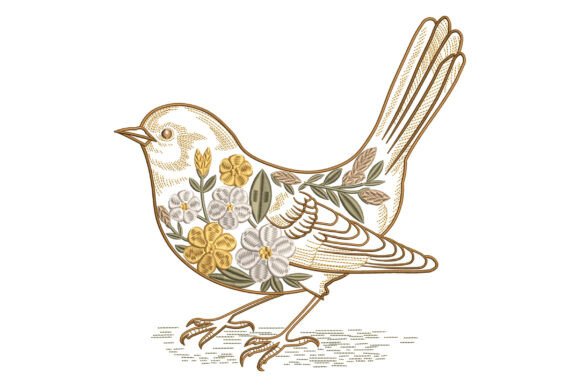
Carolina Wren Floral Embroidery
A Designer’s First Look: Bold, Lively, and Unmistakably Wild
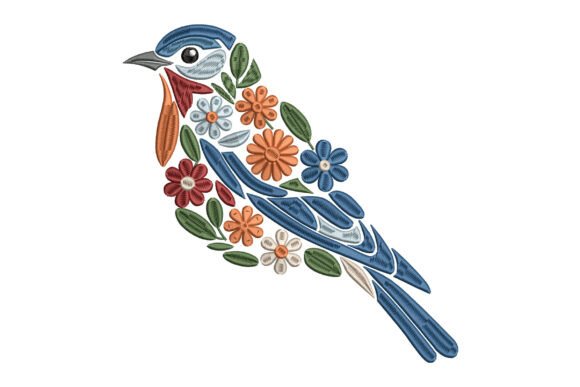
When I opened the Carolina Wren Floral Embroidery file for the first time, I didn’t just see a bird—I saw a conversation starter. The composition balances the wren’s compact, alert posture with soft, curling floral elements that wrap around it like a quiet garden secret. It’s not fussy, but it’s detailed—especially in the feather definition and petal layering—and feels intentional, not decorative filler. That matters when you’re stitching for real people who’ll hold your work in their hands, hang it on their wall, or wear it all day.
How It Stitches Up: Real-World Performance on Common Projects
I tested Carolina Wren Floral Embroidery on three very different items: a medium-weight cotton tote bag (for a local boutique launch), a brushed-cotton baby onesie (as a personalized shower gift), and a twill baseball cap (for a small-batch craft fair run). Each revealed something practical.
- Tote bag: At 4.01″ x 3.99″, it centered beautifully on the front panel without crowding seams. The 20,195 stitches resolved cleanly—no thread nesting or skipped satin stitch sections—even at moderate speed. Customers responded immediately to its warmth and charm; one asked if we’d do a matching set of tea towels.
- Baby onesie: Here, the design’s balance worked in its favor. The wren’s eye and beak stayed sharp despite reduced scale, and the floral swirls softened the overall impression—critical for infant-appropriate pieces. I used lightweight tear-away stabilizer and a size 75 needle, and the finished product held up through two gentle machine washes with no fraying or puckering.
- Caps: This is where attention to detail paid off. The design’s vertical orientation and compact width meant it stitched cleanly across the curved front panel—no distortion or stretching. I avoided placing it too low near the bill seam, where tension can pull fill stitches.
Where to Use It Thoughtfully—And Where to Pause
Carolina Wren Floral Embroidery shines on stable, medium-weight fabrics: canvas, quilting cotton, terry cloth, and midweight knits. But it asks for thoughtful placement on trickier surfaces:
- Thin or sheer fabric: The stitch density means it needs backing support—don’t skip cut-away or iron-on stabilizer, especially for lightweight voile or rayon blends.
- Dark backgrounds: The design relies on contrast between the wren’s chest and surrounding florals. On navy or charcoal, test thread colors first—cream or pale peach works better than stark white for softness and readability.
- Stretchy fabric (like performance tees): Use a light fusible stabilizer + topping to prevent stitch migration. Avoid placing it over high-movement zones like underarms or knees.
- Curved or layered areas (e.g., pocket flaps, elbow seams): Hoop carefully—the shape fits well in a 5″ hoop, but avoid pushing it into corners where dense fill areas may pucker.
What It Adds to Your Handmade Product—Beyond Just Looks
This isn’t just another machine embroidery design—it’s a subtle brand amplifier. When I added Carolina Wren Floral Embroidery to a line of kitchen towels for an Etsy shop, repeat buyers mentioned how “thoughtful” and “alive” the designs felt. That’s the effect of intelligent layout: the wren faces slightly left, inviting the eye to follow the floral curve outward—not static, but gently directional. That small nuance makes finished products feel more considered, which builds customer trust faster than generic motifs.
For craft business owners, it also supports consistency without repetition. Pair it with simple monogrammed initials or minimalist botanical borders, and you’ve got a cohesive collection—no need to reinvent the wheel each season. And because it reads clearly at both 4″ and scaled-up sizes, it adapts across product types: pillow covers, aprons, even holiday ornaments—without losing identity.
Practical Notes Every Designer Should Check Before Stitching
Before committing to Carolina Wren Floral Embroidery in a client project or production run, here’s what I always verify:
- Run a test on scrap fabric matching your final substrate—especially for texture and drape.
- Review stitch density in your embroidery software. Areas like the wren’s wingtip and inner petals are tightly filled; adjust speed or tension if needed.
- Confirm hoop size compatibility—this design fits comfortably in a 5″ hoop, but double-check your machine’s max dimensions before loading.
- Inspect small details: the beak tip, flower stamens, and leaf veins should render crisply. If they blur or collapse, your stabilizer or thread weight may need adjusting.
- Test it in grayscale mockups—does the shape read as clearly on dark and light backgrounds? I often use this step when prepping digital embroidery file listings for Etsy sellers.
- Verify licensing terms before using it commercially—especially if selling finished embroidered patches, custom apparel, or digital design assets.
Final Thought: A Design That Earns Its Place
Not every embroidery file earns repeat use—but Carolina Wren Floral Embroidery does. It’s detailed enough to feel special, balanced enough to scale across products, and expressive enough to carry meaning without words. Whether you’re stitching a one-of-a-kind baby embroidery gift, building a boutique’s signature tote bag design, or sourcing reliable embroidery file options for your craft business, this design delivers quietly, confidently, and consistently. It doesn’t shout—it sings. And in handmade work, that kind of voice is rare, and worth keeping close.