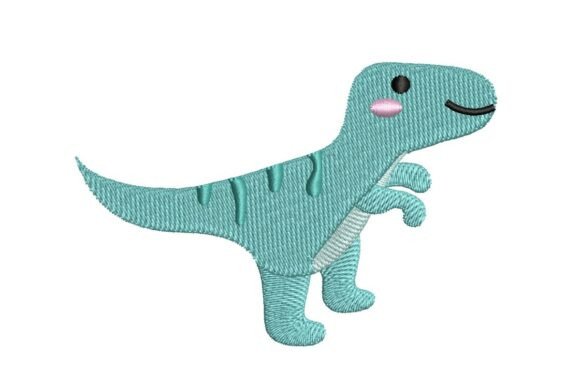
Smiling Velociraptor Embroidery
A Designer’s First Look: Charm That Lands, Not Just Cuteness
When I opened the Smiling Velociraptor Embroidery file for the first time, I didn’t see just another dinosaur motif—I saw a design with immediate personality and strong visual rhythm. The teal color palette feels intentional, not accidental; it reads as both playful and grounded—no neon overload, no washed-out pastel. Its shape is compact but expressive: wide eyes, a gently curved beak, and that unmistakable little grin that avoids cartoonish exaggeration. As an embroidery designer who’s stitched hundreds of animal motifs, I appreciate how the facial features are built for clarity at 3–4 inches tall—not so detailed that they blur on knit fabric, not so simplified that they lose character. This isn’t background filler. It’s a focal point.
Real-World Test: A Custom Baby Sweatshirt for a Dino-Themed Nursery
Last week, I used Smiling Velociraptor Embroidery on a soft organic cotton baby sweatshirt—intended as a boutique gift for a new parent whose nursery wallpaper featured subtle fossil prints and muted greens. I chose a medium-weight tear-away stabilizer and tested thread tension on scrap jersey first. The result? Clean satin-stitched edges around the raptor’s outline, balanced fill stitches in the body (no pilling or distortion), and crisp running-stitch details for the claws and eye highlights. Customers noticed it immediately—not just “Oh, a dino,” but “That smile is *so* sweet.” That kind of emotional resonance matters when you’re pricing handmade product at $48–$65. It justifies the time, the stabilizer cost, the thread selection—and makes the buyer feel like they’re getting something thoughtful, not templated.
Where It Shines (and Where to Pause)
Smiling Velociraptor Embroidery works beautifully on:
- Tote bags and aprons — its scale holds up well on canvas and denim without needing resizing
- Sweatshirts and baby onesies — the stitch density is moderate enough to avoid stiffness, yet dense enough to read clearly on textured fleece
- Embroidered patches — clean outer edge means easy cut-and-sew application, especially for craft fair vendors
- Holiday gifts and personalized products — pairs effortlessly with simple monograms or tiny “ROAR” text without competing visually
- Digital embroidery file previews — renders cleanly in printable mockups for Etsy listings or wholesale catalogs
Use caution on:
- Thin or sheer fabrics — backing shows through easily if stabilizer isn’t matched precisely
- Highly stretchy knits (like lightweight jersey) — requires excellent hooping technique and possibly a light cut-away stabilizer
- Curved surfaces like caps — the face shape flattens slightly unless digitized with cap-specific underlay (check if your version includes that)
- Dark fabrics with light thread — test contrast carefully; the teal may mute unless paired with bright white or silver-gray thread
What It Does for Your Craft Business—Beyond the Stitch
As an Etsy seller and small shop owner myself, I judge embroidery files not just by how they stitch—but by how they affect perceived value. Smiling Velociraptor Embroidery elevates a basic tote into a conversation starter. It adds warmth to a minimalist kitchen towel. It makes a baby gift feel curated, not generic. That matters because customers pay more for intentionality. They trust makers who offer cohesive design assets—not just random clipart. When your Instagram feed shows this raptor smiling from a linen pillow cover *and* a denim jacket sleeve *and* a custom tea towel set, you signal consistency and care. That builds repeat buyers and word-of-mouth referrals.
Practical Designer Notes Before You Stitch
Before committing to a client order or bulk production:
- Run a test on scrap fabric matching your final substrate—especially if using textured, dark, or stretchy material
- Check thread color contrast in natural light; teal on navy reads differently than on cream
- Review stitch density in the eye area and claws—those small zones can shift or skip if tension is off
- Confirm hoop size compatibility—if your machine maxes out at 4×4”, verify the design fits comfortably with seam allowance
- Inspect corners and curves in your embroidery software—look for jagged vectors or over-digitized satin columns
- Try a black-and-white mockup—this reveals balance and legibility faster than color
- Use proper stabilizer for your fabric type; don’t assume “medium weight” works universally
- Verify licensing terms before selling finished items or reselling the digital embroidery file—commercial use isn’t automatic
Final Thought: A Design That Fits Like a Well-Worn Apron
Smiling Velociraptor Embroidery doesn’t shout. It invites. It’s got enough charm to delight a five-year-old, enough polish to sit comfortably beside modern nursery decor, and enough versatility to move across apparel, home goods, and digital product lines. For embroidery designers and creative entrepreneurs, it’s less of a “dinosaur design” and more of a reliable, mood-lifting design asset—one that earns its place in your folder of go-to embroidery files. Use it where joy matters most: on gifts, heirlooms, and everyday objects that people choose to keep close.