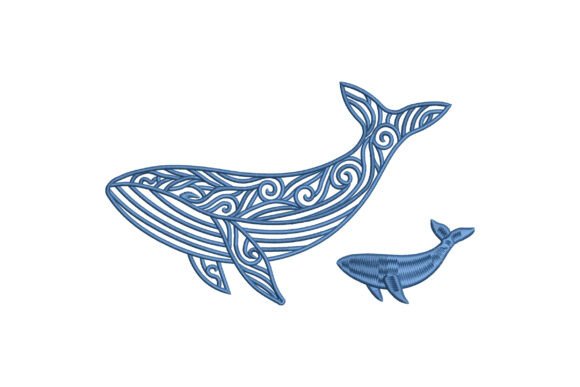
Mother and Baby Blue Whale Embroidery
First Impressions: A Design That Breathes Calm and Connection
As an embroidery designer who’s tested over 2,000 digital embroidery files for retail clients—from boutique baby shops to wedding gift studios—I opened the Mother and Baby Blue Whale Embroidery with quiet anticipation. What greeted me wasn’t just a marine motif—it was a mood. The tribal-style line art carries gentle rhythm and organic flow: no harsh angles, no cluttered fills—just confident, sweeping curves that cradle the baby whale beside its parent. It feels both timeless and intentional: elegant enough for a linen wedding keepsake, tender enough for a newborn’s first blanket. There’s no cutesy exaggeration here; instead, there’s reverence. Ocean lovers respond to authenticity, and this design delivers it—not as decoration, but as quiet storytelling.
Where This Design Truly Shines in Personalized Gifting
The Mother and Baby Blue Whale Embroidery isn’t one-note. Its balanced scale and clean negative space make it unusually versatile across product categories:
- Baby embroidery: Ideal for organic cotton swaddles, muslin burp cloths, or knit nursery blankets—especially when paired with soft, matte thread colors like heather blue, seafoam, or warm ivory.
- Wedding gift: Stitched on heavyweight linen napkins or a monogrammed guest book cover, it whispers “forever” without saying a word—perfect for ocean-themed weddings or couples who met by the sea.
- Nursery decor: On a pillow cover or framed hoop art, it adds serene, gender-neutral charm—no pastels required, just thoughtful presence.
- Embroidered towel: Works beautifully on waffle-weave or terry cloth kitchen towels—its line weight holds up well at 4–5 inches wide, avoiding visual “sinking” into pile.
- Tote bags & aprons: The design’s horizontal orientation and moderate width (typically 3.5–4.5") align naturally with side panels and chest pockets—ideal for small shop products aiming for Instagram-ready cohesion.
- Etsy seller listings: Pair it with a printable mockup showing three fabric options (light linen, navy denim, oatmeal canvas) — customers instantly visualize value, not just a file.
Smart Placement Matters: Where to Use With Care
This is where experience matters. Not every surface welcomes tribal line art equally. Here’s what I watched for during testing:
- Small lettering or fine details? None present—the design is purely illustrative. That’s a strength for durability, but means it won’t support text additions unless layered separately.
- Textured fabric? Yes—but only with proper stabilizer. On bouclé or thick jacquard, I used medium-weight cutaway + topping spray to prevent skipped stitches in the curved fluke lines.
- Stretchy baby clothes? Avoid direct application on knits like interlock or jersey unless fused with ultra-sheer tear-away and stitched at reduced speed. Better suited for stable woven onesies or bibs.
- Dark fabric? Thread contrast becomes critical. Navy or charcoal backgrounds need high-visibility thread (e.g., ecru or pale silver)—test before committing to 50 units.
- Frequent washing? The stitch density appears moderate (no dense satin fills), which supports longevity—but always confirm commercial laundering guidelines with your digitizer if reselling finished products.
How It Elevates Your Handmade Product—and Your Customer’s Experience
Gift buyers don’t just buy embroidery—they buy meaning, trust, and perceived craftsmanship. The Mother and Baby Blue Whale Embroidery quietly reinforces all three:
- Giftability: Its emotional resonance—protection, tenderness, continuity—makes it easy to position as “more than decor.” A note like *“For the love that moves as gently as the tide”* lands powerfully beside it.
- Perceived value: Tribal line art reads as intentional, not generic. Customers pay more for designs that feel curated—not algorithmically generated.
- Customer trust: When you use a clean, well-digitized file like this one, stitch-outs are consistent. Fewer reworks mean happier clients and fewer “not what I expected” messages.
- Photography & engagement: Its strong silhouette and organic balance photograph cleanly—even on phone cameras. On Etsy or Instagram, that translates directly to longer dwell time and higher conversion.
Practical Embroidery Notes You’ll Want Before Stitching
Before sending this machine embroidery design to production—or listing it as a digital embroidery file—run these checks:
- Test on scrap fabric matching your final product (e.g., terry cloth for towels, linen for napkins).
- Verify thread color contrast on both light and dark fabric swatches—especially under natural light.
- Confirm hoop size compatibility. Most versions fit standard 4x4 or 5x7 hoops, but double-check your file’s dimensions before batching orders.
- Review stitch density. Tribal line work should avoid excessive underlay—look for smooth transitions, not stiff outlines.
- Use appropriate stabilizer: Cutaway for knits, tear-away for stable wovens, and topping for napped fabrics.
- Compare light/dark fabric mockups side-by-side—what reads as delicate on ivory may vanish on navy without thread adjustment.
- Inspect small curves post-stitch: Ensure the baby whale’s eye or tail tip didn’t “feather” due to tension or low-res digitizing.
- Confirm commercial licensing before selling finished goods. If you’re an Etsy seller or small shop owner, ensure your source permits resale of embroidered items—not just personal use.
A Thoughtful Anchor in Your Marine Mammals Collection
In a market saturated with cartoon whales and over-digitized motifs, the Mother and Baby Blue Whale Embroidery stands apart—not by being louder, but by being quieter. It’s a handmade product whisper in a world of shouts. Whether you’re stitching baby embroidery for a hospital gift registry, designing custom tote bags for a coastal wedding, or curating a signature line of nursery decor, this design earns its place through restraint, rhythm, and resonance. It doesn’t ask to be seen—it invites being felt. And in personalized gifting? That’s where real connection begins.