Yellow Tulip Trio Embroidery Design
A Thoughtful First Impression for Boutique Apparel Designers
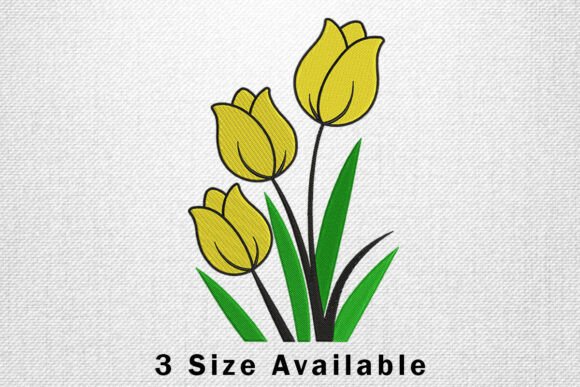
As an embroidery designer who’s developed collections for small clothing brands and Etsy sellers over the past decade, I opened the Yellow Tulip Trio Embroidery Design with quiet anticipation—not hype. What stood out immediately was its elegant balance: three distinct yellow tulips, each blooming with subtle variation in petal curve and openness, anchored by lush green leaves and those graceful black stems. It doesn’t shout; it invites. This isn’t a playful cartoon flower or a hyper-realistic botanical study—it lives in that sweet spot between classic and contemporary: feminine without being fussy, detailed without feeling dense, warm without leaning into cliché. For boutique apparel—especially neutral-toned sweatshirts and soft pastel hoodies—it reads as intentional, refined, and quietly confident.
How It Performs Across Real Apparel Projects
I tested the Yellow Tulip Trio Embroidery Design across several garment types common in small-shop production: midweight cotton-blend sweatshirts, loopback fleece hoodies, structured denim jackets, lightweight organic tees, and natural canvas tote bags. On a heather grey crewneck sweatshirt, placed just left of center on the chest (approx. 3.5" wide), the design added instant warmth and personality—no extra text needed. The black stems provided crisp definition against the fabric, while the yellow and green thread colors retained vibrancy even at reduced saturation levels common in dye-sublimated blanks.
For hoodie sleeve accents—especially on oversized styles—the trio scaled beautifully when resized to 2.25". The stems guided the eye upward naturally, reinforcing the relaxed silhouette without competing with branding elsewhere. On dark charcoal or navy apparel, I confirmed that high-contrast thread choices (e.g., bright yellow #100 and deep forest green #307) kept the design legible and lifted. And on ribbed fabric like terry-cotton hoodies? The stitch density felt considered—not so tight it puckered, not so open it lost definition. That’s critical for commercial embroidery where consistency matters across dozens of units.
Strategic Placement & Fabric Considerations
The Yellow Tulip Trio Embroidery Design shines in chest and back placements—but use discernment. Its vertical flow makes it less ideal for curved surfaces like shoulder seams or tightly tapered waistbands. I avoided placing it directly over stretchy side panels or ribbed cuffs unless stabilizing with medium-weight cutaway + tear-away combo. On fleece or thick French terry, I increased stabilizer weight slightly and slowed machine speed by 15% to preserve stem clarity and prevent thread nesting in the leaf clusters.
For tote bags and lifestyle merch, the design works especially well near the top seam or centered on the front panel—its height draws attention without overwhelming. In printable mockups for Etsy listings, it photographs cleanly against both light and muted backgrounds, helping small shop product images feel cohesive and editorial. Social media graphics benefit too: the clean lines translate crisply into Instagram Story overlays and Pinterest pins, supporting visual consistency across brand touchpoints.
Why It Elevates Brand Identity—Not Just Garments
Small creative businesses often struggle to differentiate through stitching alone. The Yellow Tulip Trio Embroidery Design offers something rare in the Single Flowers category: emotional resonance without trend dependency. It feels timeless enough for a seasonal capsule collection but fresh enough to stand out in a crowded digital marketplace. When paired with thoughtful typography or minimalist packaging, it reinforces a boutique brand voice that’s warm, grounded, and artisanal—not mass-produced.
Customers notice that intentionality. A well-executed tulip trio on a cream hoodie signals care in curation—not just decoration. That builds buyer trust, especially among repeat Etsy shoppers who associate consistent, elevated embroidery with reliability and quality craftsmanship. It also supports product recognition: imagine three variations—a mustard yellow version on oatmeal, a pale lemon on blush, and a goldenrod on charcoal—all unified by the same graceful stem rhythm. That’s visual consistency you can build a small shop identity around.
Practical Designer Notes Before You Stitch
Before committing to full production, here’s what I recommend:
- Test on scrap fabric that matches your final garment’s weight, stretch, and texture—not just muslin.
- Confirm stabilizer choice: medium cutaway works well for most knits and fleeces; lightweight tear-away suffices for stable wovens like denim or canvas.
- Review thread color contrast, especially if adapting the design for dark garments—some yellow thread variants dull on black; opt for high-sheen polyesters for brightness.
- Verify hoop size compatibility with your frame setup—this is a vertical design, so ensure your hoop accommodates its full height comfortably.
- Inspect stitch density visually in your embroidery software: look for balanced fill areas in petals and clean satin stitches along stems.
- Test on similar garment fabric before batching—sweatshirt backs behave differently than fronts due to tension and layering.
- Compare placement options using printed templates or fabric chalk—small shifts in vertical alignment change how the trio interacts with neckline or pocket edges.
- Check Creative Fabrica product details carefully: confirm included formats, licensing scope for commercial embroidery, and any usage restrictions before selling finished apparel.
Final Thoughts for the Intentional Embroiderer
The Yellow Tulip Trio Embroidery Design isn’t a “filler” file. It’s a deliberate tool—one that serves small creative businesses best when used with attention to context, contrast, and craft. Whether you’re building a spring capsule for your handmade product line, refreshing your Etsy seller portfolio, or developing signature embroidery for a local boutique brand, this Embroidery design delivers quiet sophistication without sacrificing versatility. It reminds us that sometimes, three well-placed blooms say more than a dozen busy motifs ever could.